Spoken Word

Beauty From Ashes // Spoken Word Ed.

One of my dearest friends, Bobbi Jo Brooks made a painting for me last year entitled Beauty From Ashes. We spoke a lot about the themes of the painting and I fell in love with the painting and everything it represents. When she presented it to me, we talked about me one day writing a poem to accompany it. A year later, I finally managed to capture some of Bobbi Jo’s ideas in words. The fruit of that is displayed below.

For more of Bobbi Jo’s work, go to her website bobbijobrooks.com

https://youtu.be/idkQ8ANf7i4

Beauty from Ashesby Rebekah Eckard

If you stand far enough away,

you’ll only notice the gold and white running down my body.

I shimmer in the sunlight and dance in the shadows.

You call me beautiful. Lovely.

As Pretty as a Painting.
I am a work of art,

not meant to be admired but experienced.

Come closer and touch me.

See for yourself what I truly am.

Run your fingers along my skin,

and find that I am not just a shell.

There is more to my story than what your eyes can see.


I am not a blank canvas.

Underneath my beauty there is a past.

There is always a past.

It’s only when you get close enough

that you begin to see the bumps and bruises-

the accumulation of ash that lies beneath

Years and years of failed perfection

Heaped upon the burning fragments

Of unmet expectations, hopes dashed from the rooftops,

falling short in all the ways I wanted to succeed.

Yet the artist took me as I was.

My bumps and bruises not a hindrance

But a foundation to be built upon.

Color and paint poured over and over

Soothing my enflamed wounds.

Making wonder from the darkest parts of me.

I can feel these new elements forever changing who I am.

Not hiding, but transforming.

Ash glittering into gold.

Ridged landscapes smoothing into porcelain.

So you see beauty where once was brokenness.
Yes, I am more than a pretty picture.

I am a living, breathing story

Echoing throughout time.

Ashes to Beauty.

Death to Life.

Come closer and see for yourself.

Come closer, and see yourself.

Ramblings

The Secret to Creativity

IMG_8248(1)
Photo by my dear and talented friend, Bobbi Jo Brooks

Over the years, I’ve made a habit out of celebrating the Friendiversary of C.S. Lewis and J.R.R. Tolkien on May 11th every year. Wether this is truly  the day they met matters little to me. Instead, I let this made up holiday serve as a reminder of why I make time for creative community in my life.

I usually celebrate by making scones, drinking tea, and reading some old favorites. This year was a little different. I spent the day camping with dear friends, miles from the nearest cell phone signal. As the sun set behind an old country lake, we ate barbeque and sat until midnight talking by campfire. My post this year is a little late, but I like to think that Lewis and Tolkien would have approved of my choices. You see, while I like to celebrate their friendiversary on May 11th, their habit of being active in creative community is something we can practice year round.

I remember when I first started writing. Alone with my lukewarm coffee, I would sit on my porch morning after morning trying to create magic out of nothing. Truth be told, my hands spent more time on my head than on my keyboard. But that was the life I had chosen as a writer, or so I thought. I pictured Lewis, walking down an old country road, brilliantly forming complex characters in his mind which he would put to pen as soon as he got home. Tolkien, I saw, sitting in his study with the fire slowly burning down into ash, laboring over his languages while everyone else was snuggled in their beds.

Both of these men did indeed have their moments of solitude, but what is truly fascinating is not how they worked as individuals, but how they cultivated a friendship that spurred each other on to be who they were created to be.

Hear this. These men met together regularly and learned from each other for many years. They did work in solitude, but they also spent a significant portion of time sharing their work with one another and asking for feedback and critique. I think so often we only see Lewis and Tolkien as they were at the end of their lives, and we fail to remember that they were ordinary people who needed help, encouragement, and sometimes even strong critique. I would like to submit to you all that it was their friendship with one another, and the company they kept, that spurred their genius. I believe that their literary masterpieces are a direct result of their friendship.

Before the Inklings, Lewis was a mostly unknown poet who had never tried his hand at fiction. Tolkien was a philologist who was more interested in creating languages than chiseling away at a plot.

How many of us have held our breath alongside Ransome as we watched the battle of the Garden take place once more on Perelandra, hoping that this time mankind would make the right decision? And yet, it was Tolkien who dared Lewis to write a story about space travel in the first place.

How many of us have mourned the loss of beauty in a once-untouched middle earth and smiled ear to ear at every mention of a second breakfast? And yet, it was Lewis who encouraged Tolkien to spend less time creating languages and elvish anthologies and more time writing plots.

In order for these two men to become who they were created to be, they needed each other.

These men discovered – or rather, rediscovered – the secret to creativity: community. We were not made to work in solitude, but to share, to borrow, and to build upon each other.

I passionately believe that every artist needs their Inklings. You might be thinking, “Yes, well, I’d love it if there was a group like that around me, but there isn’t.” Well then, I’m challenging you to create one. All you need is one person in your field, a place to meet, and a desire to see each other succeed. I think so often we keep waiting for our own personal Lewis and Tolkien to show up at our door and meanwhile we miss the life-filled, flesh-and-bone artists around us.

In the fall of 2016, I was just beginning to try my hand at fiction. I attended a novel-writing course that met once a week for eight weeks. Two of the women from my course and I began meeting at coffee shops throughout the city to sit quietly at a table and write together. It was painstakingly wonderful. I’d go even when I didn’t feel like writing and I’d write. When one of us had writer’s block, we talked it out. Slowly, we found we didn’t just need each others’ presence and encouragement; we also craved each other’s feedback.

Nearly a year after that first writing class, four of us gathered in a living room with chapters of our novels in hand. We met again two weeks later, each bringing new chapters. A few months later, we invited another person to join us. Within the next year, we gained another new face. Finally, our numbers were at six. Six people from five different countries speaking four different mother tongues. We had very little in common, but we showed up at each other’s houses twice a month and we did the most gracious, loving thing we could do for one another: We tore each other’s novels apart.

We pointed out plot holes, spelling errors, flimsy characters, repeated lines, everything. It hurt. It was embarrassing. But each time I left that group thinking, “of course! Why didn’t I see that before?” Three years later, these people know my novel just about as well as I do. This group has been my eyes when I was too blind to see past the next chapter. They have picked up my pen and dipped it in ink when I wanted to call it quits. They have coupled encouragement with critique, and they have turned this lonely task of writing into a story of how I found my people and found my voice.

There was no Lewis, no Tolkien, no Barfield, but we kept meeting and we kept growing. We never intended to start a long-term writing group, we just kept showing up. If you know one other artist, you can start a creative community. That’s all it takes. Two people with a commitment to show up in a common, physical space every week and lovingly make each other better. Anyone could do this. You could do this.

I believe that our success as artists directly correlates to the community around us. Today, I’m not just celebrating Tolkien and Lewis, I am celebrating the six people who sit in a living room with me twice a month and make my creation more lovely, more true, and more captivating than it could ever be with just me.

If you don’t have your Inklings, I challenge you to find them. It will take time, but find them and let them revolutionize your work. They will, I promise.


Aedaliegh of Arceldör · Short Stories

Writing Worlds into Being

It’s been a while since I’ve posted on this little blog I came to love. In August 2015, I made a commitment to spend 15 minutes everyday writing or doing some other form of creativity. The finished products were posted here.

When the year ended, a tiny little short story began growing into a novel, which I’ve spent the last 3 years writing and tweaking (and rewriting and retweaking). Here’s a section that is near and dear to my heart.

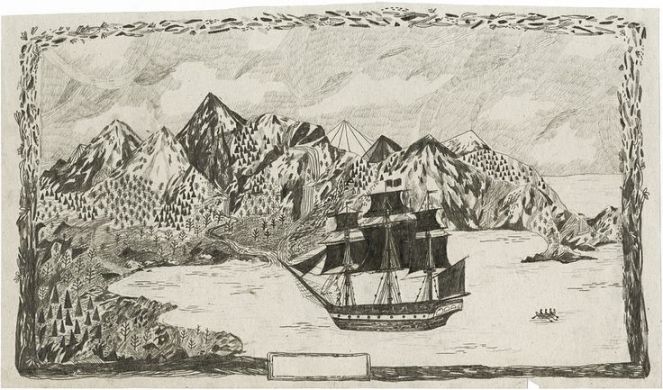
Aedaliegh of Arceldör Chapter 1, Part 2.
FInal Installment


“Aedaliegh Van Hoeflich, I won’t tell you again. Stop fiddling with that bow and help me wash these clothes.”

Aeda looked up at her mother sitting on the other side of the room and groaned, “Ma, can’t it wait? I’ve about figured out how to fix it.” The string of her bow had snapped off the limb the day before, and she was currently trying to mend it by the fire. The evening before she had smoothed the top of the limb with sandpaper and created a new hole. Now all she had to do was reattach the bowstring. The bow was worn. It’s edges were smooth from wear, and the leather grip was slowly coming off, but Aeda couldn’t imagine giving it up. Her father had brought it home on her fifth birthday. He had walked into the house and immediately placed it’s pale wooden frame in her lap, her grin reaching to his ears.

Her mother had gasped. When her mother had asked him to get a bow for her birthday, she had simply meant for him to buy a nice pink ribbon- perhaps one made of silk- for Aeda to wear in her hair. But her father was a hunter, and his mind had immediately slipped into a daydream of teaching his only child to hunt alongside him in the forrest. He had not even considered another meaning. Aeda’s mother had been furious, but when she saw how her daughter had clutched the bow to her chest like one might hug a doll, she had shrugged her shoulders and simply let the matter pass.

“I’m almost done, and you had promised to help me. I won’t tell you again, so you best get your little legs over here.”

Her father was in the corner leaning against the hearth, sharpening stones for arrow points. His face reflected the bright orange glow of the fire. This was Aeda’s favorite time of the day. They would sit together by the fire and smooth pale wood into shafts and rocks into arrowheads. They were set to go hunting together after the harvest was over. She looked at him, silently begging for him to intervene- to tell her mother that she was allowed to stay right here beside him, but instead he leaned towards and whisper with a wink, “Go help your mother, little deer. I’ll see if I can’t finish your bow.”

Aeda sighed dramatically, but she knew there was no pointing in fighting with either of them. She handed her bow to her Father and dragged her feet to go and sit with her mother beside the table. She sat on an old wooden stool leaning over a large tub of water. Her father chuckled as Aeda sat down on the stool with a loud crash beside her mother.

She submerged her hands in the lukewarm, milky water and picked up the first piece of cloth her hands touched. Pulling the pale grey garment in and out of the water multiple times before beginning to scrub it against the water board. Her mother washed clothes like a musician might play a song, filling the house with drum beats made of swishing water and soaked cloth. Aeda fell in line with the rhythm made by her mother’s graceful, sun kissed hands. The fire crackled softly, and her father mimicked it sounds as her struck stone against stone. She could hear their neighbor singing an old country lullaby to her baby as she rocked him to sleep. This was melody of their every day, and it was her favorite song. The whole village came together under the stars and played their own kind of instrument.

Aeda looked at her mother, hunched over the basin of water. Her brow was furloughed, signaling that she had already lost herself in another thought. Aeda didn’t look anything like her mother. She had olive brown skin where her mother’s was a deep brown. Her mother was one tall tree of sharp angles, and she was rounded and sturdy like her father. Yet, everyone told her she was her mother through and through. Their outsides may not resemble each other, but their hearts were of the same mold. Aeda watched her mother stare into the fire, and she knew what what she was thinking.

Her mother never stayed in the present world for long. She was always trying to remember old stories, or dreaming about what the future might hold. The towns people knew her mother by another name: they called her Legende.

Aeda peered up at her mother through her lashes and smiled, “Before the mountains had begun to sprout and the rivers took their shape, the earth was but dirt, a void and lifeless expanse.”

Her mother opened one of her eyes, and smiled. The rhythm of her hands changed from a choppy drum beat to a slow serenade. Her mother’s steady voice rang out and began to paint pictures into the cold air above them. “In the heavens above dwelt the gods. One day, Adamos, the god of color, came across this blank expanse and he was saddened by it’s lack of beauty. He inquired of the gods as to whom it belonged, and when he found that it had no one. He fashioned for himself thirteen helpers – both male and female- to share in the creating with him. He gave each of his thirteen helpers blank canvases and colors with which to paint. He outstretched his arms and freed them to fill the canvases with beauty and wonder and joy- whatever they could think of. Floortje…”

Aeda’s mother stopped the story and opened her eyes, “I’m afraid I’ve forgotten their names. Would you help me?”

Aeda nodded gleefully, she knew the story by heart. She sat up straight over the bucket of water and tried to remember how her mother and told it, “Floortje began to paint the rose, with bright red petals and dark greens stems. Tuur made the Oak tree with it’s wide trunk and branches that stretch from one end of the forrest to the other.” Aeda paused, trying to remember the others.

“And Steren?” Her mother added, helping her through the story.

“Oh, yes. Steren crafted the mountains and valleys and Kalb drew all the beasts and animals like the squirrel and the moose. Even the wolf was his idea, though I don’t think he planned on them having teeth that sharp. Kalweh designed the most beautiful dresses and blouses so that they all looked like gods themselves.  Oh, and then there Acker who drew tiny little seeds that grew into all kinds of vegetables and fruits. …. and then… and then….”

“Hulbrecht.” Her mother reminded her.

“Oh yes! Hulbrecht…. What did he do?

   Hulbrecht saw a great mass of water, and so he formed the sea. And Wy painted rivers that flowed out from it.”

“That’s right,” interjected Aeda.” She put her finger on her mouth and bounced it on and off her lips. “Okay, so there’s also Miena, Acker’s wife, who filled the waters with fish. And then finally Blythe, who put the small little lights in the sky.”

“Very good.” Aeda’s mothered cooed, still scrubbing a blouse with soap.

“And when each of the thirteen…”

“You’ve forgotten one,” Aeda’s father chimed in from across the room.

“No I haven’t.”

“That was only twelve.”

Aeda and her mother both did a quick count of their fingers and Aeda realized indeed her father was right. She pinched her nose and squinted one idea, trying her hardest to think of who she had forgotten.

“I’ll give you a hint.” He father teased, standing up from his place beside the fire and joining them to finish the laundry. “We put it in our supper.”

“Thyme!” Aeda shouted. “The thirteenth was Thyme and he made all the herbs and spices.”

“I’m glad we remembered that one,” Aeda’s mother smiled. “Or else our dinners would be quite bland.”

They all let out a small chuckle, and her father took hold of her mother’s hand and smoothed his thumb over her palm.

“And when each of the thirteen,” her mother continued, “completed their designs, Adamos came and whispered life into the painting, and they moved out of the canvases and began to fill the dark world. Mountains rose from the expanse, and trees sprouted out from the dirt. Beasts began to roam the fields and vegetables were planted from food. But there was one of the thirteen who did not design anything for Adamos to finish. He name was…

“Ermelinda!” Aeda exclaimed. “Ermelinda only sat and watch as all the others spent everyday painting and drawing. So, Adamos came to her, and asked her why she wasn’t painting anything. And she said to him…

Aeda’s mother stood up from her stool and with a dramatic flourish, put her hand on her husbands should and pointed out the window. “I do not paint, my King, because I can not stop thinking of the creations my friends have already made. What if Floortje painted her flowers onto a tree of Tuur’s? What if Steren caused the earth to rise over Wy’s water? What could we create together? We work as thirteen, but what could we create if we worked as one?”

Her mother let out a big sigh and sat back down on her stool, and continued.

“Adamos saw what Ermelinda did. He saw the dogwood and the waterfall, though they had yet to be named as such.”

“And then, he told all the others that they should start working together to make even more beautiful things! They could work in pairs or in groups of three, four, five, or even six!”

“And why, my little deer, did Adamos ask them to do that?” Aeda’s father asked her.”

“Because he realized that they were stronger together?”

“And what did they create?”

“Well… Tuur and Acker created the apple tree. Floortje and Kalb painted the peacock. And I think Era and Hulbrecht created rain so that Acker and Thyme’s crops didn’t always have to be planted close to the rivers.”

“Well done!” Aeda’s mother exclaimed. “You’ll have replaced me in no time.”

“I could never.” Aeda blushed. “You finish Mama. The ending is my favorite part.”

“Oh very well. Finally, Adomas created the sun, and called it to rise in the sky and disappear for half the day. He declared that when it rose, the thirteen should toil and work, but when it sank beneath the earth, they should sleep and rest until it rose once more. And so the earth was filled with beauty and wonder, and they sat by the Sea as the sun sank beneath the earth. They ate of the fruits they had created with their own hands, and drank the wine of their own imagination.  When the land was filled and their work was done, the thirteen came to Adamos and they asked what they were to do now. And Adamos told them, we shall enjoy what we have made.”

It was now Aeda’s father who stood. Assuming his most kingly stance, he spoke in a deep voice, “We shall enjoy what we have made. We shall work the ground and rule over the lands together. Each of you shall take a partner of their own, and we shall spread across the lands, each pair in charge a section. We shall watch over it with great care. We shall have children and we shall teach them to create and to rule, just as we will do.” And then he turned to Ermelinda and asked her to join him.”

Her father held out his hand to his wife and lifted her up off the stool to face him.

“Adamos offered his hand to the wise Ermelinda and  asked her to stand beside him for the rest of the eternity. That very night the two were wed, and the twelve fashioned crowns out of gold and silver and placed them on their heads.”

Her mother placed a hand on her fathers check and whispered softly, “And so the two began to rule over the lands, and the twelve spread out amongst the them. Tuur and Floortje traveled to the forest and made their home there. Steren and Kalb took the the Northwest Mountains, and settled in a cave. Holbrecht and Wy built the first ship, and lived on the sea, and traveled the rivers. Acker settled south of the sea, where the soil was rich, and Miena went with him. His brother Thyme, and his wife Kahweh, settled just east of him, at the bank of the mountains. And finally, Blythe and Era settled in the eastern valley just before the castle where Adomas and Ermelinda dwelt, watching over the lands from their castle on Jhoeksteen Mountain.

They called the realm “Arceldör” for it was pleasant place filled with beauty and ruled in goodness. And so, they began to build their homes and have children to fill them. Their children married with one another, and had children of their own, and the land of Arceldör was filled with life and beauty, and people to revel in it.”

Her mother took Aeda’s head, and drew it to her. For a moment, they stood their together hands and hearts joined together. The neighbor’s baby began to cry, and it broke the still, quiet moment.

“Little deer,” whispered her father, “its time we went to bed.  We all need rest for tomorrow. Let’s try and shut our eyes.”

Her mother picked up her crutches off the floor and maneuvered her way to standing. One of her crutches slipped beneath her weight, knocking the wash basin over and covering the dirt floor with the milky water.

Her mother groaned, beat the dirt, and then laughed. “You think after six months I’d have figured out how to use these things.”

“Go on to bed, you two.” Her Father said, helping her mother off the floor. “I’ll clean this up.”

Her mother’s newfound disability didn’t seem to bother her parents as much as it did Aeda. Tears began to roll down her face, and Aeda could bear it no longer. She ran to her bed and flung herself down on the mattress, covering herself completely with blankets as the tears continued to fall down her cheeks.  Her mother held a hand up to her father, and followed her to the bed. As gently as one might pull off a cloth that’s been covering a wound, she pulled back the blankets covering Aeda’s face.

“Mother,” Aeda choked out quietly, “Do ye really think Adamos and Ermelinda are happy with the way things are now? If they created the lands and animals to be good and beautiful, then why, “Aeda paused and sucked in a breath before letting it all spew out. “why does winter make people sick? And why do the wolves steal our livestock? Why does the land not give us enough food to make our bellies stop grumbling? Why does the King work us so hard and pay us so little?”

The magic in the story had run out, and Aeda could here the cracks forming in her mother’s voice. “So many questions my love, and all of them good ones, but let’s leave them for another night when the harvest is over. Tomorrow, we shall celebrate and dance and tell stories the whole night. And I promise to answer all the questions you can think of.”

“Tomorrow then.” Aeda sighed. And she fell asleep dreaming of what it would be like to live under a king like Adamos.

Ramblings

Inklings of my own


Inklings 2018 pic     It’s that day again… the day I bake scones, drink coffee with friends and celebrate two wonderful writers whose works cultivated a love for myths in me at an early age. C.S. Lewis, author of The Chronicles of Narnia, and J.R.R. Tolkien, author of The Lord of the Rings, met on this day over ninety years ago. Shortly thereafter, Tolkien sent Lewis an epic poem he had written. It was filled with lore and myth and the fantastical realm, passions they both shared. Lewis returned the poem several days later with notes, critiques and even suggestions for how Tolkien could make his lines flow better. Can you imagine actually critiquing Tolkien? It sounds almost absurd. But Lewis did, as well as passing along one of his own poems. And so began a small community revolving around this idea of sharing and critiquing one another’s works. You might know them as the Inklings.
But today, instead of talking about the original Inklings, and their vast influence on each other and the countless books birthed through their gatherings, I want to tell you about my own set of Inklings.

In 2016, I moved to Berlin for a 9-month internship. (Yes. Yes. Two years later I’m still here, but that’s another story.) About three months in, I realized the short story that I had been playing around with wasn’t a short story. Much to my great displeasure, it was a novel. I was a little baby writer who had written a mere handful of things. This craft was new to me, and I had no idea what I was doing. To be cliché, I found myself in front of a mountain with no map, no supplies, and no training whatsoever.

By grace, I had moved to a city that embraces artists and I found a writing class targeted toward people who were just starting to write their novels and needed guidance. Oddly specific right? Kate, my teacher was brilliant, wise, experienced and kind. (*Insert shameless plug for the Reader Berlin and Kate who is AMAZING).

We spent the first four weeks learning the basics of novel writing, and the last four weeks reading a chapter of each other’s work and critiquing the pieces in class. Once again, I had no idea what I was doing. My typical response to art had always been “I really liked it” or “this is so beautiful.” And that wasn’t good enough here. It was fine to say those two phrases, but it needed to be followed by a “because…” or a “but…”

I also learned it was okay not to say those two phrases. That is was perfectly fine to look at a writer and politely say, “you know, this wasn’t really my thing. However, I did appreciate when you…” For a half-southern girl raised in the land of buttered words and sugared expressions, being open and honest when I didn’t like something felt like I was slapping someone in the face and kicking them in the stomach once they fell in the dirt.    But then it was my turn to have my piece critiqued, and I realized that critique isn’t a slap in the face at all, but a friend telling me to pick up the pen and try again. Critique can be a loving teacher pointing out what I need to work on and how I could improve. Every single person at that table took time to read my work, think about how it could improve, and share their thoughts with me. They didn’t do this to be cruel, they did this so that one day my dream of seeing Aedaliegh of Arceldör in a bookstore might become reality.

When the course ended, a few of us would meet at coffee shops throughout the city to sit quietly at a table and write together. The next course came and we signed up again, seeking more feedback and more knowledge of writing as a craft. When Kate offered her next course, an entire 10 weeks solely spent reading and critiquing each other’s work, I immediately signed up. This, I was learning, was how I really get my novel to go somewhere. Yes, it was helpful to learn about different styles of narration, using third person verse first person, and so much more. But I found that the critique is what spurred my book to be better. Not just when my own piece was critiqued, but also in the critiquing of others I learned what worked and what didn’t,  to spot a mistake, and even to anticipate what some of the feedback might be and make it better as I was writing the first draft.

Somewhere at the end of the third course, Kate hinted that some of us might be able to do this critique thing on our own. As we walked back to the subway that night, a few of us asked, “Could we really do this? Start our own group? Do we even want to?”

That August, five of us met in a living room and began this process on our own. We didn’t know how long it would last, but we wanted to see where it would go. It’s been hard. We’re all incredibly busy. Some of us have families. Some of us have had to leave the country for three months. I started a new job that makes me get up at 4:30 am on Tuesdays even though writing group last until 10 or 11 pm on Monday nights. We have had to make sacrificed to be in this group. We’re tired. We have little time. But all of us have made our books and this group a priority because we know it is one of the keys to our success.

A few weeks ago, I shared a scene I’d been hiding from this group for nearly two years. I was so nervous they would read this scene, throw the paper across the room and say something like, “What in the world, Bekah! You must be absolutely insane to write something like this.” But after two years with the group, I finally decided I trust them enough to share it. They loved it, which is still the most shocking thing that’s happened. They absolutely loved it and made me promise not to take it out. Then came the “but..” at the end of the chapter with a really sweet and lovely little moment I had written between Aeda and Fryderik. And my girl, Laura, looked at me, and said, “I was shocked because Aeda would never do this. It’s not her at all.”

She was right. It took me a minute to see what she was saying, but it hit me. Aeda would never do what I had her doing at the end of this scene. It went against everything she was. That night, Aeda got a wardrobe change, and all because Laura, over the past two years, has gotten to know my character almost as good as I have. I’ve said it for the last two years and I’ll say it again now…

The secret to creativity is to surround ourselves with a community. We were not made to work in solitude, but to share, to borrow, and to build upon each other.

When I tell people about this group, and what we do, they always say, “Oh, I must be hard to critique someone’s work. I could never do that.” And while that used to be my same opinion, I reply, “It’s not so hard after a while. I love their work, and I want to see them succeed.” And it’s true. I want to buy their books one day. I want them to buy mine. And in order for that to happen, you need more than one set of eyes.

The secret to the Inklings success was each other. C.S. Lewis may have never gotten some of his works published had it not been for Tolkien’s connections and recommendations (not to mention that his Space Trilogy actually started out as a dare from Tolkien.) Tolkien may have never gotten his head out of languages and anthologies long enough to write a plot had it not been for Lewis urging him to write the next chapter so that he could see what happens in the story.

If I ever get Aeda published, it will be because of these women. They have kept me writing when I was tired and wanted to forget Aeda altogether. They have given me ideas when I had no idea where to go. They have given me encouragement and critique. They have helped me see things I never did, and have made turned this lonely task of writing into a story of how I found my people.

I passionately believe that every Artist needs their Inklings. I will never stop proclaiming this. If you’re a lonely artist, you don’t have to be. Join a group. Create a group. Less than two years ago, these five women were strangers from five different parts of the world with three different mother tongues. And yet, two years later, here we are because we showed up, we spent time thinking through each other’s work, and we were honest with one another.

I believe that our success as artists directly correlates to the community around us. Today, I celebrate the five women who sit in a living room with me once a month and make Aeda more lovely, more true, and more captivating than she could ever be with just me.

If you don’t have your Inklings, find them. It will take time, but find them and let them revolutionize your work. They will, I promise.


Spoken Word

Jupiter

As mentioned in the video, one of my goals for this year (as well as continuing to work on my children’s novel, “Aedaliegh of Arceldör“) is to write seven poems based off of the book by Michael Ward, Planet Narnia,as well as the Chronicles themselves.

The first piece, entitled “Jupiter” ,  is based off the first book Lewis wrote “The Lion, the Witch, and the Wardrobe.”

Enjoy! And hopefully, there will be more to come soon.

https://youtu.be/x3NBMy6P608

Jupiter

The world has been drained of it’s color like hope from our souls.

We stay huddled in our houses, scared of what the woods might hold.

We’re are covered in white and frozen in fear,

too scared to raise our voices- too scared the trees might hear.

Still, we grasp at ancient words and hold fast to the hope

of a king that is coming, breaking through the snow

They say when he comes, all will be made right.

They say when he comes, we’ll dance unhindered in the light.

And at the sound of his name, our hearts begin to beat

like an army of warriors being woken from winter’s sleep.

Do you hear the red robin’s song echoes loudly through the trees?

Behold the brook begin to bubble like joy overflowing from the deep.

Shoots are springing from the ground as snow fades away.

Look there, the sun rising red as day begins to break.

Frozen rivers part and blossoms release their blooms

as if all of creation felt our longing to be renewed.

So we shed our winter coats like a profession of faith,

trading our fears for swords there along the bank.

Our faces glow red with the warmth of the sun

as we bow before the king- the one who’s finally come.

King Jupiter you are- The king above all kings.

You roar with laughter and reign in magnanimity.

You are lion-hearted, and yet saturated in peace.

You are joviality and song-  the very picture of Spring.

But winter has followed us and she is staking her claim.

She points out all our failures, our follies, our mistakes.

She tells us we’re not worthy to dance in summer’s sun,

but her voice is overshadowed by the king declaring “come!”

Thunder claps over us as cold collides with warmth.

We shiver at the shadows, yet still we raise our swords.

And just when darkness seems to swallow us whole,

we look up to find the dawn rolling in, igniting hope.

Like the morning sun spreading slowly across a field,

our king descends, proving he both conqueror and shield.

And we can but simply watch as his beauty mingles with his wrath.

Conquering what we could not, he is the king we always lacked.

He calls us before him and crowns us with new names.

We are Gentle. We are Just. Magnificent and Brave.

We take our place beside him and to this great joy we cling:

We are no more than servants; we are no less than kings.

Spoken Word

Ink

Surprise, Surpise. I wrote another poem* about my tattoos. I read it at a friend of mines party this week and thought I’d share it here. One day, I’d like to be one of those spoken word artists whose words pour out from their mouths slowly like molasses, full of body and rich flavor. Until then, I’ll hold tightly to my phone and say one too many “um”s before I start. We’re all learning how to be creatives. We all learning to speak boldly and look people in the eyes as we say “yes, I’m an artist.” 

*I wouldn’t really call it a poem, more of a “rhythmic rant.”

If you’re in Berlin, stop by “Art on the Terrace” and join our little creative community. 

Ramblings

A Friendiversary and A Graduation

blog photo


It’s that time of year again. The time when I pick a new scone recipe, read a book on the Inklings and write a little rant of a blog post about how we need community. Today is the day that spurred countless books to be written, turned unknown professors into world renown authors, and created an entirely new genre of literature that had never seen before. Today is the Friendiversary of C.S. Lewis and J.R.R. Tolkien.


These two men, at first greatly opposed to one another, became friends after discovering a mutual love for Nordic Myths. They began to meet on a weekly basis, reading and translating together, until one day Tolkien arrived with a myth of his own to share, the Lay of Leithian. Lewis not only returned the poem with margins covered in notes and changes that should be made, he also brought one of his owns poem to read. And so the Inklings began.

Over the next twenty years, others, such Owen Barfield and Charles Williams,   would come to join their meetings and share their literary works with the group. Every week, would begin the same way, with Lewis lighting his pipe and asking accusingly, “Well then, has no one got anything to read us?”

We will never fully be able to weigh the effects that question made. Out of this group, literary giants emerged and countless books were written. Before the Inklings, Lewis was a mostly unknown poet who had never tried his hand at fiction. We have Perelandra because Tolkien dared Lewis to write a story about space travel. Tolkien was a philologist who was more interested in creating languages than chiseling away at a plot. We have Lord of the Rings because Lewis encouraged Tolkien to spend less time creating languages and elvish anthologies and more time writing plots. In order for these two men to be who they were created to be, they needed each other. Their success hinged on their friendship.

I’ve said it once and I’ll say it again now: The secret to creativity is to surround ourselves with a community. We were not made to work in solitude, but to share, to borrow, and to build upon each other. My community is what kept me up to midnight last night typing at this computer because I promised them that I would send them a new chapter of my novel by the end of the night. My community is what spurred me to even consider writing a novel, when a friend looked me in the eyes, and said, “Maybe Aeda isn’t a short story, maybe she’s a novel.” My Community gave me the courage to pick up a pen. And when I thought I was too exhausted to write another word, my community dipped my pen in ink and whispered encouragingly, “just one more line.” You can always write one more line.


As I’ve read through Glyer’s Bandersnatch: The Creative Collaboration of the Inklings,  I began to see my own accomplishments in a different light. Saturday I will graduate with a Masters Degree that’s been four years in the making. I joked with a friend that when I receive my diploma, I want to place an asterisk beside my name, flip over the piece of paper and write out the names of all the people who labored alongside me. Since I won’t be able to walk across a stage (flight tickets from Berlin to Dallas are extraordinarily expensive) today is a chance to for me to celebrate all that my community and I have accomplished together.

*Nancy Postler, my mother, who never let money stop me from following my dream. She never once hesitated when her adult (and self-proclaimed independent) daughter called her freaking out that textbooks cost $700 for one semester. She watched me make mistakes and still helped me pick up the pieces when I realized that she was right all along. Sometimes I forget how great she really is, and then she’ll say, “Don’t worry. We’ll figure all this out.”  So thanks, Mom, for always helping me figure out a way to follow my dreams.

*Stephanie & Christopher Elmerick, my parents across the pond. I was 18 and stupid, proven by the fact that I said in an interview with you, “If you hire me as your intern, am I going to have to babysit your kids? Because I don’t like kids, and I’d rather not do that.” You told me no, that I wouldn’t. But then life changed, and I found myself spending the summer falling in love with three kids. I flew home in August and changed my major to Early Childhood Education. I found my greatest passion because you both welcomed into your family. There is so much more I could say to you two. I could talk about how Stephanie has mentored me in grace and humility and wisdom. I could talk about how Christopher has pushed me to be kinder and more servant-hearted. But I’ll stop there, and simply say that I look more like Jesus because y’all are in my life.

*Nicole, who at one point shared my apartment, my major, and my last name. Thank you for forcing me to volunteer with you in that 2nd grade class on Wednesday Nights. It was my first real experience teaching and I haven’t stopped since.

*John & Ismael, two of my first bosses who both gave me jobs I was unqualified for. They told me that I was good at something and that maybe I should pursue it further. Every job I have since applied to comments on how much experience I have for a person my age. The irony is not lost on me. I am now considered qualified, because of the grace you both showed me.

*Katrina, who let me follow her around as she visited grad schools. I didn’t end up at any of those schools, but it was on the 12 hour road trip back from Chicago when she looked at me in the car and said, “Hey, what about DTS? I’ve heard they have a good program.” We googled it on our smartphones, and I started an application the next day. She has shown me the beauty of being a nerd, and have given me a safe place to be strange. This blog is the product of one of our four hour long conversations of following rabbit trails and youtube videos when she encouraged me to be less of a consumer and more of a creator. I am a better artist because of her.

*Jenna, the first person I met on campus at DTS, and my first friend. She picked me up from the airport at least fifteen times, and let me sleep on her couch when I needed to. She let me ugly cry on her bed. She let me angry rant when a classmate did something that upset me. She is my kindred spirit on a campus where it was hard to sometimes fit in, and I would not have stayed at DTS had I not met her. (Also, she graduated on Saturday too! If I would have made it, we would have stood next to each other in line. So, Congratulations Friend! We made it! I’m so proud of you!)

*Corielle and Beth, the two women who provided me a house and a job when I hit rock bottom my second semester in grad school, moved home, and tried dropping out altogether. They made the rest of my life as easy as possible, so that when I recovered, the damage wouldn’t be as bad. They cried with me, watched HGTV with me, and gave me hard advice that I didn’t want to hear. You both were there for me in one of the darkest seasons I’ve encountered. Thank you.

*To my professors at DTS who let me be who I am. I am proud to have attended a school that encouraged my creativity. In Spring of 2015, I took a class in which we were required to write two poems. Those poems led to a song, which led to me remembering how much I loved writing as a child. Three months later, I started this blog, which led to a short story about a little orphan girl named Aeda. I am a writer because I went to a school that encouraged me to use my creative talents in an intellectual setting. I realize now how rare this truly is.Thank you.

*Lauren, my best friend. When she came home to me crying over a paper that I couldn’t finish, she sat down beside me and talked me through concepts I didn’t understand. She was my sounding board, my “hey, what do you think about this? Am I crazy? Could this be right?” person. And besides being the brilliant woman she is, she proofread all my papers, catching every grammatical error time and again. (Though she didn’t proofread this, so I’m sure she’s wincing a little as she catches all of my mistakes.) Furthermore, in addition to my schoolwork, my novel wouldn’t exist without her. I’ll never forget the moment she looked at me and said, “It’s not a stupid idea. It’s really beautiful actually.” Those simple words spurred me to start telling a story that I’d been too scared to even attempt for four years. A year later, she looked at my little short story and encouraged me to consider turning it into a novel. She always knows how to say the right thing, the true thing, and the scary thing all at once.

I am graduating on Saturday because of these people. It may be my name on the Diploma, just as it may be Tolkien’s name on The Lord of the Rings. But we all know that I would not be at this point without these people. They are my community. My family. My Inklings. They have pushed me to start things I thought were beyond my reach, and have held me up when I thought about quitting. Thank you for your struggles, your sacrifice, and your work on my behalf. If I have accomplished anything, it is because of you all.

So, today, let’s celebrate friendship. Let’s celebrate what a community is capable of.


Spoken Word

the Color of Home


Image-1 (2)Home looks a lot like the color green.

Coming home to little white house

against the backdrop of golden fields

with shutters that had been painted the perfect shade of hunter green.

You were our tiny grasp of the American dream.

You were a place to be free-

to run wild through pastures and carve mazes through fields of wheat.

I remember how we worked in those fields all summer long

building our little castle out of scraps we found.

I remember the sound of the shotgun when the farmer found us

Traipsing through his crops. We ran all the way home

until we found safety behind a great green door.


Home looks a lot like the color green.
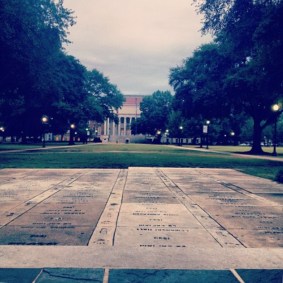
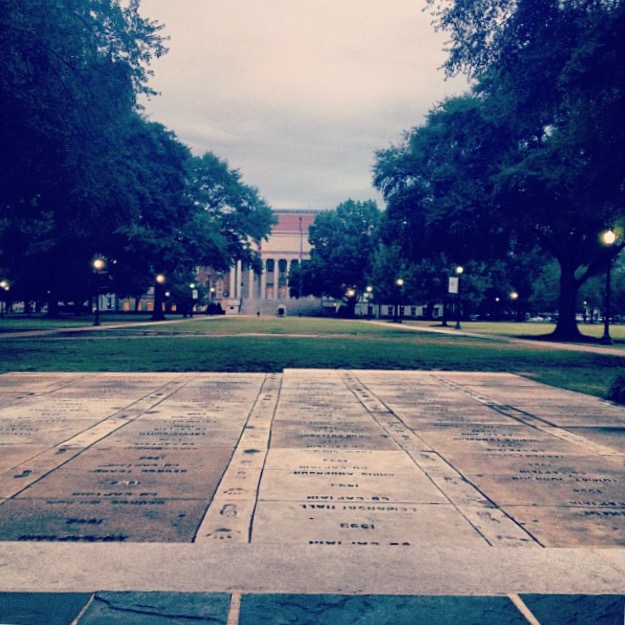
One great wide expanse of a quadrilateral.

It was at the center of everything.

Your grass was the perfect shade of summer green,

surrounded by red brick buildings with white staircases spiraling up the sides.

How many times was the sun just too lovely to go to sit inside a classroom?

How many times did we throw down the weight we wore on our backs,

and throw Frisbee under the shade of giant oak trees?

The bell chimes and reminds us that another hour had passed.

One less hour that we could stay in the holy space.

The night before graduation, we escaped to this timeless expanse

And sat for our while in the dark of the night

ignoring the fears that came with tomorrow.

and the inevitable goodbyes we would have to say.


Home looks a lot like the color green.

It’s mint green tile covering the walls of the U-Bahn station

signaling that it is time to get off the subway,

that I can let my shoulders slump and my feet drag.

The day is over. My duties are done.

I grab a beer from the shop on the corner and take my time walking up cobblestone streets

that sparkle rose gold reflecting the setting sun.

and I inhale slowly, the edges of my mouth slowly curving up.

I can rest now. I am home.

Spoken Word

One Day

I’m supposed to be writing a paper for school right now. While as I was typing out my outline, I was reminded of a poem (or rant) that I started working on this past summer. It just never felt like the right time to post it. But as I was writing my paper on the same topic, I just got really excited reading it through (and also I’m procrastinating) so I’m posting it now.

It was inspired by a conversation with my friend, KG, way back in July when sunshine and warmth were things that existed.


image-7
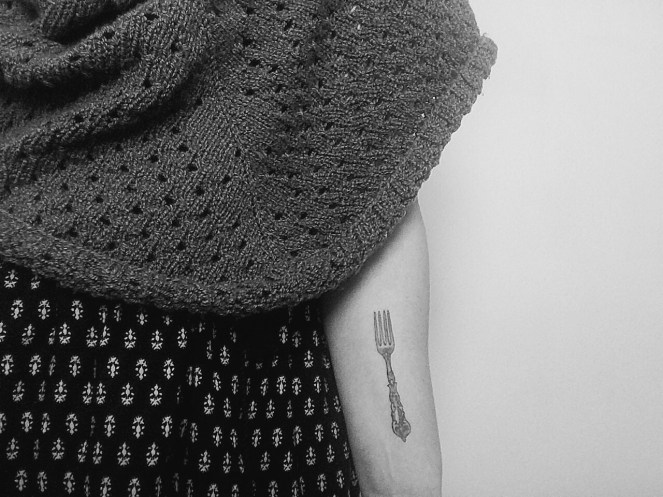
“Keep your fork, the best is yet to come.” -Southern Proverb


I want to sprint

straight on towards the horizon,

never turning or falling backward.

So that the pounding of my feet on pavement

will match the beating of my heart.

And I will stick up my chin and run into the wind-

one foot in front of the other in a perfect line.

But right now my feet are too swollen

from this dead weight that I bare

and so I find myself looking out the window

dreaming of a day when I’ll be able to leave this chair.


I want to speak.

I want to sing.

I want words to flow out of my mouth like poetry-

strong like a tide and loud like a waterfall.

But every time I try the words don’t come out right.

I just can’t…

I’m not able to…

Well the words, you see…

So I’m left typing on this computer screen

hoping the click-clack noises of my keyboard turn into a symphony.


And I want to see

right past those dense clouds and into eternity,

but my eyes are too weak to see the lines in own hands.

Like a blind man trying to find his lover in a crowd

I am always looking, always searching.

I strain my eyes and I put on glass lenses,

but everything always comes out distorted.

And so I walk home alone, and dream of a day

when I can once more look up at the clouds

And see ships and castles instead of another overcast sky.


Just tell me to pick up mat.

Send an angel to touch my lips with coal.

Rub some dirt in my eyes.

I’d walk to Siloam or to the ends of the earth

If you told me that I’d be able to touch the hem of your robe.


Like the trees in a storm, I am groaning for the sun.

Groaning for the day when this body will be made new.

When I shall run unhindered to your side.

When I sing of love without a stutter.

When I shall see beauty without having to look through fogged glass.

Come Quickly.

Oh, please come quickly.